01
Learned by asking.
The judgment that runs a company lives in conversation and instinct — so Brevity learns it in conversation, the way a chief of staff would.
YOUR COMPANY'S KNOW-HOW, RUNNING
Your best people's judgment, running as skills your agents execute under your checks — yours to keep.
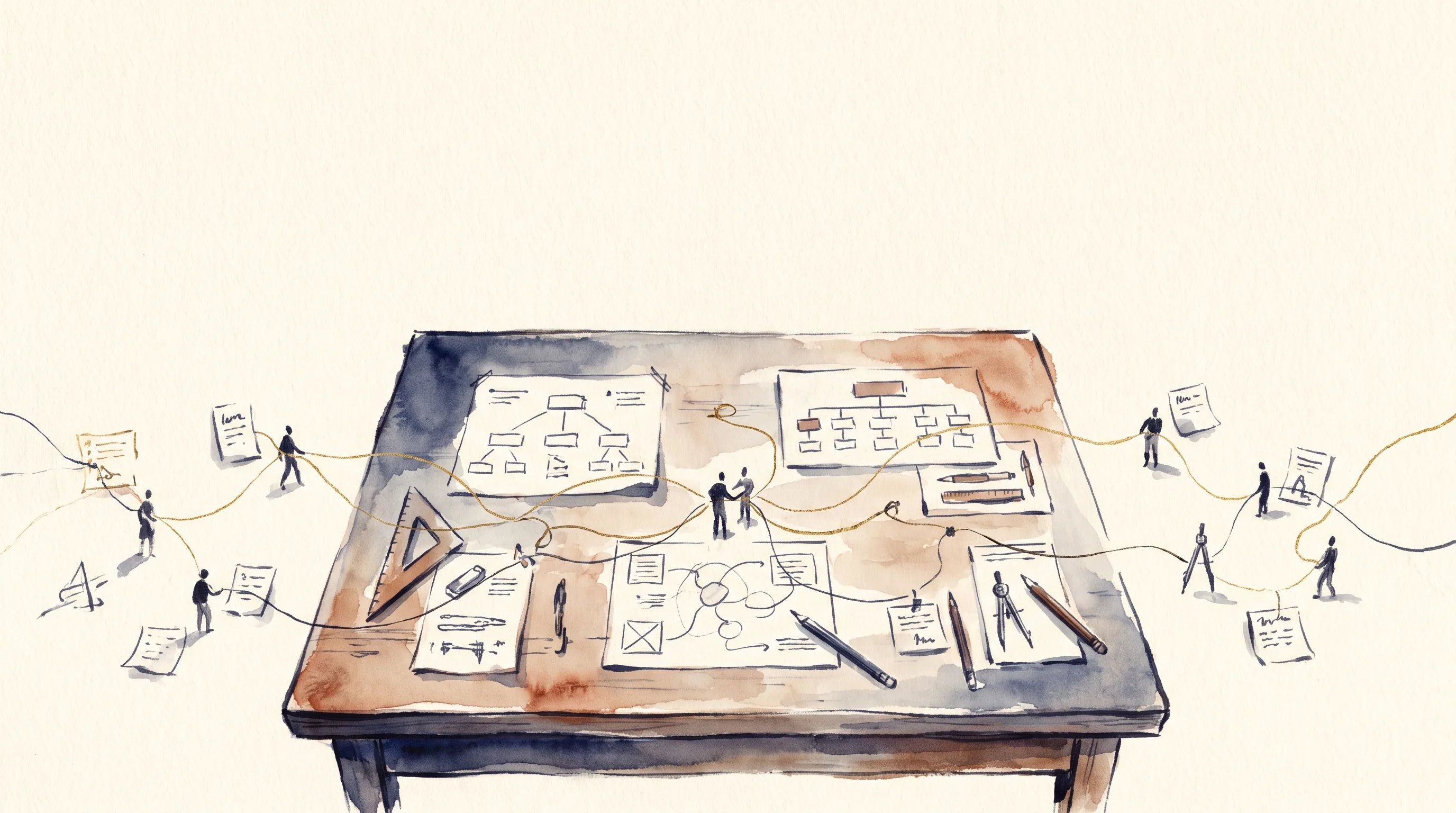
THE UNWRITTEN HALF
The judgment that calls a rollback at 2 a.m., the unwritten order of a release, the reason nobody ships the Tuesday before quarter-close — it lives in people's heads. And it's the half that runs the company.
Today that knowledge is tribal: whoever happens to know, knows. It's uneven: the ten-year veteran and the new hire run the same release two different ways. And it's mortal: when someone leaves, it walks out the door with them.
THE LOOP
Brevity interviews your people the way a chief of staff would: in conversation, while they work. Twenty minutes reaches what ten years of tickets never recorded.
What it hears becomes a runnable skill. Versioned, reviewable, in a file you own.
Agents execute it under the gates you already trust: CI, tests, code review. Nothing merges without evidence.
Every run is checked against what actually happened. The audit trail writes itself.
Each execution teaches the skill. The procedure your best engineer described in April is sharper by June — even after she changes teams.
THE LIVING FABRIC
Below: a living map of one team's knowledge. One relation binds many things at once — the person who holds a procedure, the skill it became, the check that verifies it, and the agent that runs it. Light one and the whole relation rises as a single membrane.
ONE GRAPH, THREE VERBS
UNDERSTANDS
Assembles your organization's operating picture ambiently, from conversations — where the work is actually decided.
MANAGES
One assistant per person. Right-sized alerts, decision points that genuinely need you — and nothing that doesn't.
EXECUTES
Governed agent fleets that ship real work under your gates. Every action scoped, evidenced, reversible.
Under the hood, all three share one substrate: a graph where one relation binds many things — the person, the skill, the check, the agent — into a single connected fact. Yes, a hypergraph. That's the only time we'll say it.
FOR ENGINEERING LEADERS
Engineering is where the checks already exist — CI, tests, review — and where the judgment is ready to run today.
CI, tests, and review gates are already there and already trusted. Brevity's agents merge only through them — no new process to invent.
Who did what, under which check, with whose approval. Every action carries its evidence.
Agents act inside granted scopes, on your existing secrets hygiene. Blast radius is a setting you choose.
Skills sharpen against real outcomes in your repos — every sprint.
WHY IT LASTS
01
The judgment that runs a company lives in conversation and instinct — so Brevity learns it in conversation, the way a chief of staff would.
02
What Brevity captures comes back as a portable skill — a file in your repo, yours to run, move, or read at any time.
03
Everyone who teaches the system keeps a lane that is provably their own. People tell the truth to a system that's theirs — that honesty is what makes the capture good.
Portable by design
Skills are files you own. Leave any time, take everything.
Private lanes
Every contributor's lane is cryptographically theirs.
Full audit log
Every capture, every run, every approval. Exportable.
Runs on your stack
Works across your agents, harnesses, and models. Swap any of them, any time.
Early access is open for engineering teams running agent fleets.
Preview build — submissions aren't stored yet.